
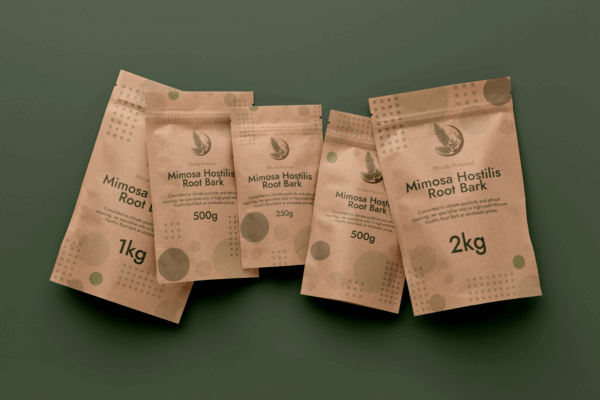
Plant-based materials are often described using a mixture of scientific names, historical classifications, abbreviations, and everyday terminology. This can make botanical research confusing, particularly when several expressions refer to closely related concepts. MHRB and Mimosa root bark are common examples.
MHRB is generally associated with Mimosa Hostilis Root Bark, while Mimosa tenuiflora is the scientific name commonly encountered in modern botanical references. The expression mhrb sale belongs primarily to commercial and search terminology, whereas botanical descriptions focus on species identity, plant anatomy, geographical distribution, and physical characteristics.
Understanding the terminology begins with separating these different forms of language.
MHRB: Breaking Down the Abbreviation
MHRB is an abbreviation formed from Mimosa Hostilis Root Bark.
The abbreviation became widely recognizable because Mimosa hostilis was historically used as the scientific name associated with the plant. The final part of the abbreviation, “RB,” refers to root bark.
Although convenient, MHRB is not a complete botanical description. It does not automatically provide information about geographical origin, root maturity, processing method, particle size, or storage conditions.
For detailed botanical documentation, those additional characteristics may need to be recorded separately.
The Taxonomic Story Behind the Plant
Scientific classification provides a framework for distinguishing one species from another.
The plant commonly associated with MHRB is Mimosa tenuiflora, a member of the Fabaceae family. It belongs to the Mimosa genus, which contains numerous species distributed across tropical and subtropical regions.
Mimosa hostilis is an older scientific name that remains visible in historical sources and online terminology.
The continued appearance of both names does not necessarily indicate two separate botanical materials. Instead, it reflects the history of plant nomenclature and taxonomic revision.
Looking at the Plant as a Whole
Before considering root bark, it is useful to understand the characteristics of the complete plant.
Mimosa tenuiflora can develop as a shrub or small tree. Its growth form depends partly on local environmental conditions.
The foliage consists of compound leaves with numerous small leaflets. Branches can have protective thorns, while reproductive structures include flowers and seed pods.
These features are valuable for botanical identification because they provide multiple points of comparison.
Once the material has been separated from the living plant, however, most of these characteristics are no longer available.
Root Bark Has Its Own Anatomy
A root is not simply an underground version of a stem.
Roots have specialized tissues adapted to anchoring the plant and interacting with soil. They participate in water acquisition and mineral uptake while also responding to changes in the surrounding environment.
As woody roots become older and thicker, their outer tissues undergo structural development.
The resulting bark can vary according to root age, diameter, location, and growing conditions.
This biological background helps explain why pieces of root bark can differ naturally in their physical characteristics.
Why “Mimosa Root Bark” Is a Broad Expression
The phrase Mimosa root bark is a common descriptive term rather than a complete scientific classification.
The Mimosa genus contains multiple species. Therefore, the word “Mimosa” by itself does not establish the exact species involved.
In discussions specifically concerning MHRB, the terminology generally points toward Mimosa tenuiflora, historically known as Mimosa hostilis.
Using the scientific name alongside the common expression provides greater precision and reduces ambiguity.
Where Mimosa Tenuiflora Naturally Occurs
The natural distribution of Mimosa tenuiflora is strongly associated with northeastern Brazil and extends into other parts of Latin America.
The species is capable of growing in environments where rainfall varies substantially during the year. Seasonal dryness can place different pressures on vegetation compared with areas receiving consistent rainfall.
Soil characteristics are also significant because roots develop directly within the soil environment.
Differences in rainfall, soil texture, drainage, temperature, and water availability can influence the development of individual plants.
Environmental Conditions Leave Physical Traces
A plant’s environment can influence its physical structure.
Roots growing in different soils may experience variations in moisture, resistance, nutrient availability, and aeration. These factors can affect root development over time.
Consequently, naturally sourced root bark does not necessarily have a perfectly standardized appearance.
Differences can occur in:
- Thickness
- Fiber arrangement
- Density
- Surface texture
- Color
- Degree of woody development
Such variation is consistent with the biological nature of plant material.
What Happens When Root Bark Is Dried?
Fresh root bark contains a significant amount of water. Drying removes much of that moisture and produces changes in its physical properties.
The tissue generally becomes harder and more brittle. Its weight decreases, and its surface can become rougher.
The drying environment can influence the outcome. Temperature, airflow, relative humidity, and duration all affect how quickly moisture is removed.
This means two materials from the same botanical source can display minor physical differences if they have experienced different drying conditions.
Processing Creates Different Physical Forms
Root bark does not have to remain in its original form.
Mechanical processing can divide it into progressively smaller pieces.
A useful way to understand the sequence is:
Whole root bark → sections → broken fragments → coarse particles → fine particles
Larger sections preserve more of the natural structure. Smaller particles retain fewer visible features of the original tissue.
Fine powders may therefore look considerably different from intact bark even though the underlying botanical source is the same.
The Relationship Between Particle Size and Moisture
Particle size has an important physical relationship with surface area.
When one large piece is divided into many smaller particles, the combined surface exposed to surrounding air increases.
This is particularly relevant to humidity.
Fine plant particles can interact with atmospheric moisture more readily than larger pieces. Under unfavorable conditions, this may contribute to clumping or changes in flow characteristics.
Storage practices should therefore take the physical form of the material into account.
Color Is Not a Botanical Fingerprint
Brown or earthy coloration is commonly associated with dried woody plant materials, but color should not be treated as a definitive identification tool.
The visual appearance of root bark can be influenced by:
- Plant maturity
- Root age
- Geography
- Drying
- Processing
- Air exposure
- Storage
Even particle size can change perceived color because finely divided surfaces reflect light differently.
A particular shade should therefore be viewed as one physical observation rather than proof of species identity.
Why Processed Bark Is Difficult to Identify Visually
Botanical identification is usually strongest when several plant structures are available.
For Mimosa tenuiflora, these may include foliage, branches, thorns, flowers, fruits, bark, growth form, and habitat.
Root bark provides a much smaller set of characteristics.
Once the material is fragmented or powdered, many morphological clues disappear completely.
This creates a practical limitation: physical description and species authentication are not the same thing. A material can be described by color, texture, and particle size without those observations being sufficient for definitive botanical identification.
Storage Begins With Environmental Control
Dried plant material can remain sensitive to its surroundings after processing.
Humidity is particularly important because dried tissues can interact with moisture in the atmosphere.
Fine particles have greater surface exposure and may respond more readily to changes in environmental humidity.
For general preservation, dried botanical materials should be kept in a clean, dry, stable environment and protected from unnecessary exposure to moisture, excessive heat, direct sunlight, insects, and contaminants.
What Good Storage Records Should Contain
Physical storage and documentation work together.
A useful record can include:
- Scientific name
- Historical botanical name
- Plant part
- Geographic source
- Physical form
- Processing information
- Quantity
- Storage date
- Environmental conditions
These details help establish continuity from the original plant material to the stored botanical product.
They are particularly useful when several visually similar materials are handled in the same location.
Distinguishing Variation From Damage
Not every change in appearance indicates deterioration.
Natural botanical variation can involve different shades, fiber patterns, thicknesses, densities, and particle sizes.
Other observations are less typical and may indicate unfavorable storage conditions. These include visible fungal growth, unexpected dampness, insect contamination, or persistent abnormal odors.
Understanding this distinction prevents normal biological variation from being confused with environmental deterioration.
Commercial Language and Botanical Language Are Different
Online searches frequently combine scientific terminology with commercial expressions.
For example, mhrb sale describes a commercial search context rather than a botanical specification.
Similarly, “Mimosa root bark” provides a general description of plant material, while Mimosa tenuiflora identifies the species using scientific nomenclature.
These expressions can overlap, but they serve different purposes.
When researching botanical material, scientific names and documented characteristics generally provide more precise information than commercial wording alone.
Historical Literature Requires Careful Interpretation
Older botanical literature can contain terminology that differs from modern sources.
A researcher examining historical documents may encounter Mimosa hostilis repeatedly, while a modern taxonomic reference may use Mimosa tenuiflora.
Recognizing historical synonyms is therefore an important research skill.
It allows information from different periods to be compared without assuming that changes in nomenclature necessarily represent changes in the underlying plant.
Ecological Perspective on Root Characteristics
The ecology of Mimosa tenuiflora provides another explanation for natural variation.
The species occurs in environments where plants can experience alternating wet and dry periods. These conditions influence soil moisture and the broader availability of water.
Because roots develop underground, they respond directly to these conditions.
The physical characteristics of root tissue can therefore reflect a combination of genetic, developmental, and environmental influences.
Ethnobotanical History
Mimosa tenuiflora has been discussed in ethnobotanical research concerning traditional relationships between people and plant species.
Ethnobotany brings together botanical science, anthropology, historical records, and traditional ecological knowledge.
Such research can explain how plant names, descriptions, and cultural associations developed over time.
However, historical or traditional references should not automatically be interpreted as modern evidence regarding safety, efficacy, or contemporary applications.
A Practical Terminology Comparison
|
Term |
General meaning |
|
MHRB |
Abbreviation associated with Mimosa Hostilis Root Bark |
|
Mimosa hostilis |
Historical botanical name |
|
Mimosa tenuiflora |
Commonly used modern botanical name |
|
Mimosa root bark |
General description of root bark from a Mimosa species |
|
Root bark |
Specific plant tissue associated with the outer root structure |
|
Botanical synonym |
An alternative scientific name associated with a species |
Understanding these distinctions makes botanical information easier to interpret.
Frequently Asked Questions
What does MHRB mean?
MHRB commonly stands for Mimosa Hostilis Root Bark.
What is Mimosa root bark?
It is a general term describing bark associated with the roots of a Mimosa species.
What is the modern name associated with MHRB?
Mimosa tenuiflora is commonly used in modern botanical references, while Mimosa hostilis is a historical name.
Why are both botanical names found online?
The two names reflect different stages of the species’ taxonomic history.
Does root bark have a uniform appearance?
No. Natural variation can occur because of plant age, geography, drying, processing, and storage.
Can color confirm the species?
No. Color alone is not sufficient for reliable botanical identification.
Why does grinding affect appearance?
Grinding reduces the size of particles and changes how the material reflects light and displays its original structure.
Does particle size affect moisture behavior?
Yes. Smaller particles have greater surface exposure and can interact more readily with atmospheric humidity.
Where is Mimosa tenuiflora naturally associated with?
It is strongly associated with northeastern Brazil and other areas of Latin America.
What plant family does it belong to?
Mimosa tenuiflora belongs to the Fabaceae family.
Conclusion
MHRB and Mimosa root bark are related expressions, but they represent different levels of botanical description. MHRB is an abbreviation associated with Mimosa Hostilis Root Bark, while Mimosa root bark is a broader common expression. Modern botanical literature commonly identifies the associated species as Mimosa tenuiflora, with Mimosa hostilis retained as a historical name.
The material’s characteristics are influenced by root development, geographical environment, drying, processing, particle size, and storage. Once root bark is extensively processed, many of the morphological features needed for visual identification disappear.
For that reason, a clear understanding of botanical terminology should be combined with information about plant part, scientific classification, source region, physical form, and storage history. This provides a more accurate framework for interpreting MHRB and Mimosa root bark terminology.